Tech Ideas & Best Practices
In today’s fast-paced, hybrid work environment, an intranet is more than just a file repository, it’s the digital heart of your workplace. For companies using Microsoft 365, SharePoint intranet templates are a powerful way to launch engaging, user-friendly portals without starting from scratch.
In 2025, the best modern SharePoint intranet templates go beyond design. They focus on employee engagement, collaboration, and productivity making your intranet a daily go-to space for your team.
According to a Gallup Workplace Report, companies with highly engaged employees see:
1. 21% higher profitability
2. 17% higher productivity
3. 41% lower absenteeism
A modern, well-structured SharePoint intranet can directly contribute to these results, if it’s designed with engagement, efficiency, and business goals in mind.
Why Leaders Should Care About Intranet Templates
For CEOs, CIOs, HR directors, and Operations Heads, an intranet is not just an IT tool, it’s an ROI generator.
- Faster decision-making: Centralized, accurate data reduces delays.
- Lower operational costs: Reduced time wasted searching for documents (IDC estimates knowledge workers spend 2.5 hours/day searching for information).
- Better compliance: Controlled access and version history reduce risks in audits.
- Improved onboarding retention: Structured learning reduces early attrition.
Using ready-to-deploy SharePoint templates means you can achieve these benefits in days instead of months, without high custom development costs.
Why Employee Engagement Matters in Your Intranet Design
An intranet’s purpose is to connect employees to the tools, people, and information they need. A well-designed intranet can:
- Foster a sense of community in hybrid and remote teams.
- Reduce time wasted searching for documents.
- Improve communication across departments.
- Enhance transparency through centralized updates.
Modern SharePoint templates combine beautiful layouts with smart functionality, ensuring employees don’t just visit the intranet, they use it regularly.
Key Features of Modern SharePoint Intranet Templates in 2025
Here’s what’s driving engagement in this year’s top intranet designs:
1. Personalized Dashboards
Employees see customized news feeds, tasks, and resources based on their department, location, or role.
Example: HR news for HR staff, project updates for project teams.
2. Mobile-First Design
With remote work and field operations, mobile optimization is no longer optional.
Modern templates offer responsive layouts and app-like experiences on any device.
3. AI-Powered Content Recommendations
Leveraging Microsoft’s AI tools, intranet pages now suggest relevant documents, people, and announcements to keep employees engaged.
4. Integrated Communication Tools
Direct integration with Microsoft Teams and Outlook ensures employees can act on updates without leaving the intranet.
5. Gamification Elements
Badges, leaderboards, and recognition walls encourage participation and interaction across the company.
10 Modern SharePoint Intranet Templates for 2025
1. Employee Hub Template
A centralized landing page for all employees, featuring company-wide news, announcements, events, quick links, and HR resources in one place.
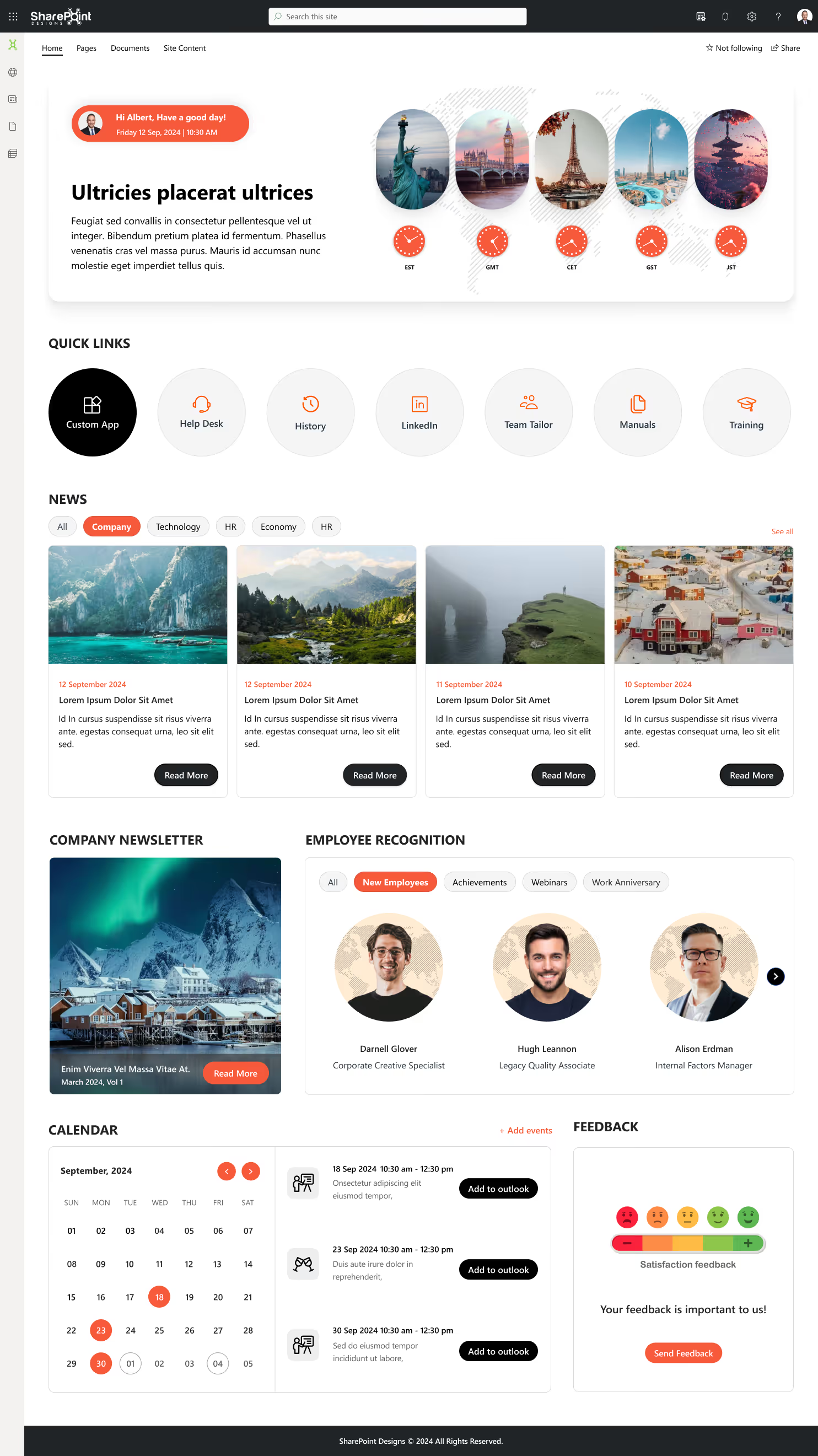
Benefits:
- Improves organization-wide communication.
- Builds transparency between leadership and staff.
- Reduces time spent searching for important updates.
- Encourages daily engagement with company culture.
2. HR Portal Template
A dedicated HR site where employees can access policies, submit leave requests, check benefits, download forms, and find contact details.
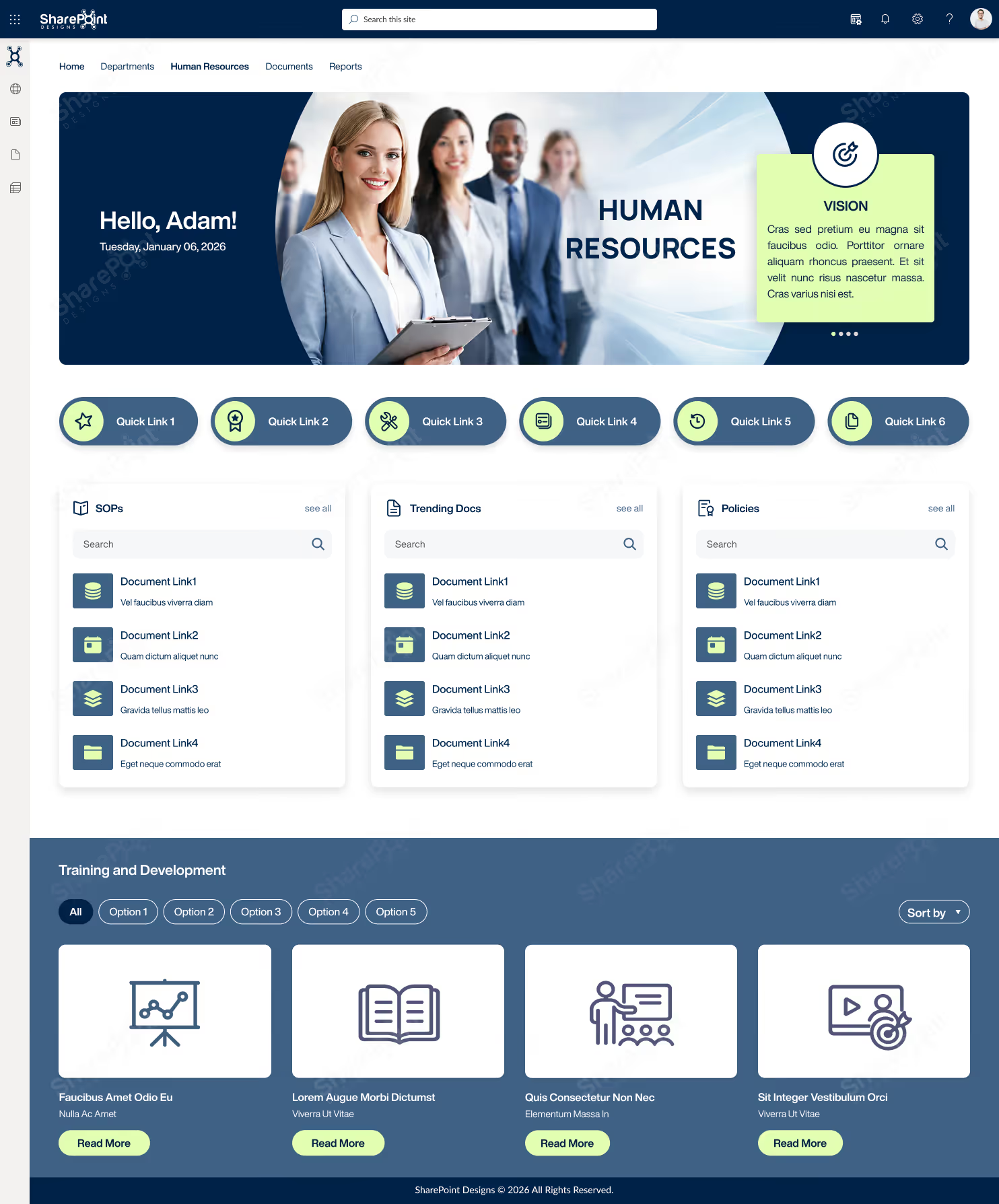
Benefits:
- Cuts HR admin workload by up to 30% via self-service tools.
- Ensures policies are always accessible and up-to-date.
- Speeds up HR approvals through automated workflows.
3. Learning & Training Center
A modern intranet template is designed to centralize learning resources, manage employee training programs, and track skill development across the organization. Perfect for enterprises focusing on continuous learning, compliance training, and professional development.
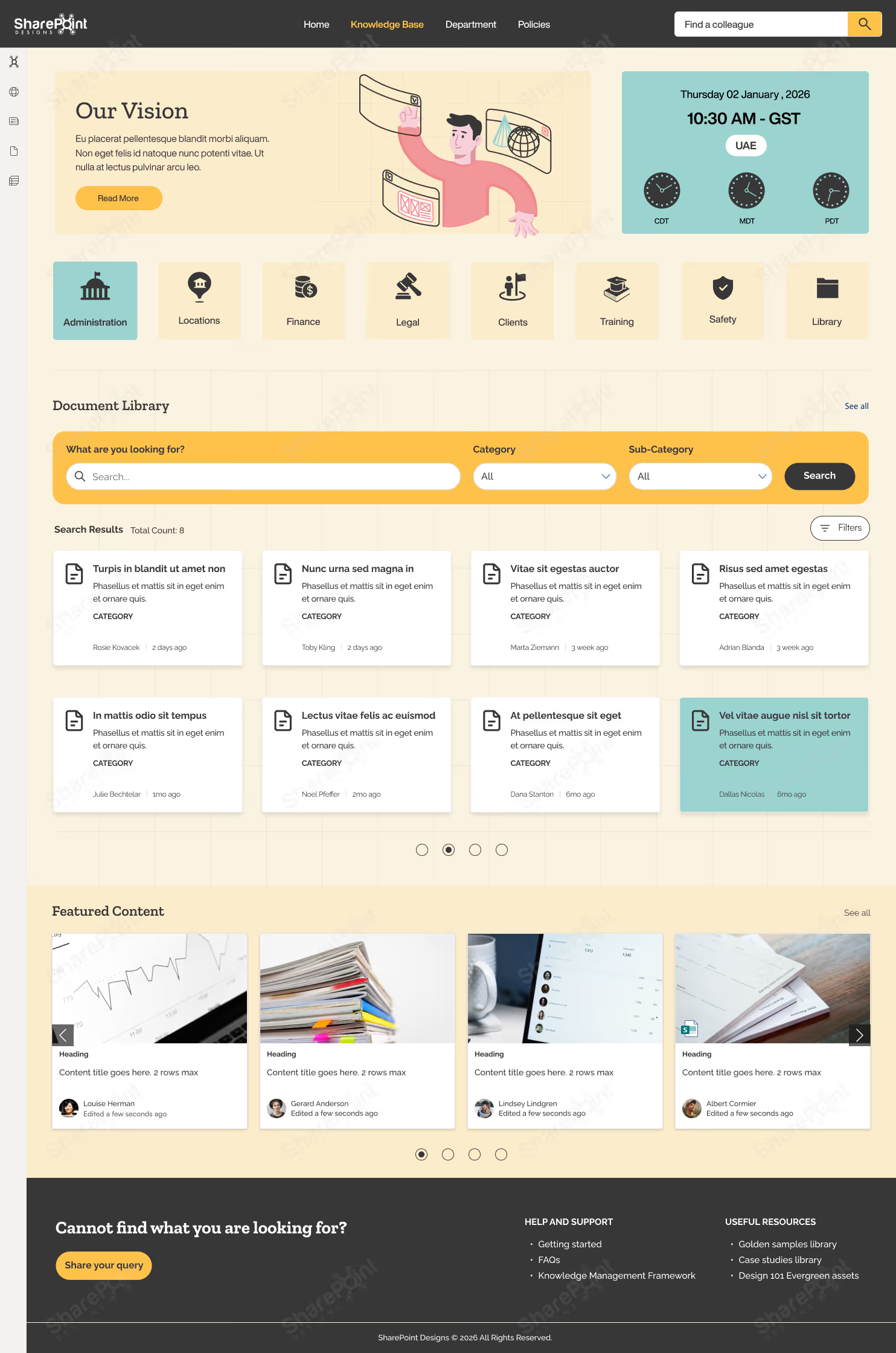
Benefits:
- Speeds up onboarding with a one-stop learning hub for new hires
- Reduces training costs by 30-40% through digitized learning materials
- Enables leadership to track workforce skill gaps and plan upskilling investments
- Improves retention rates by fostering a growth-oriented culture
- Boosts productivity by ensuring employees have quick access to the knowledge they need
4.Onboarding & Training Template
A structured portal guiding new hires through welcome messages, training videos, FAQs, and mandatory policy sign-offs.
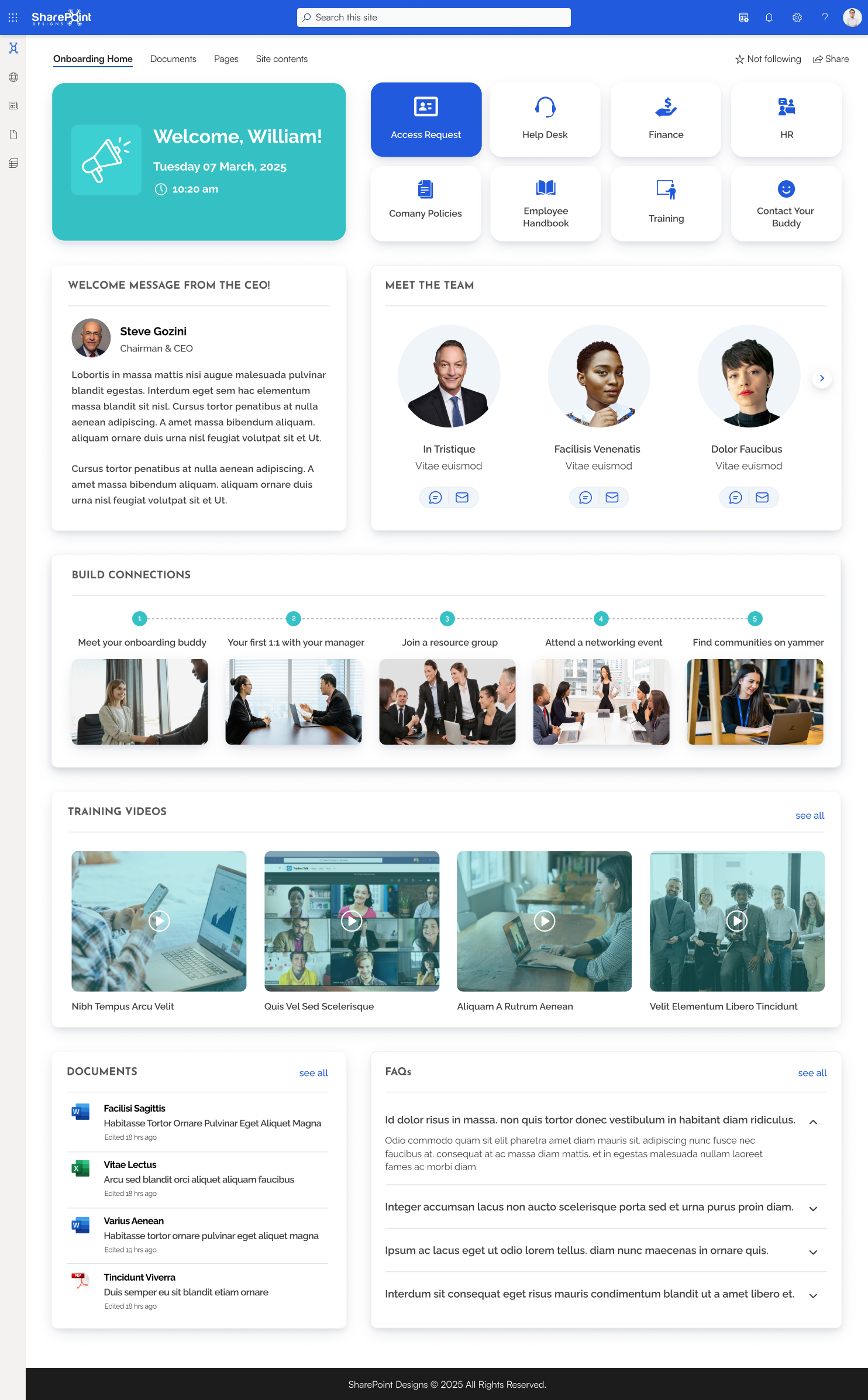
Benefits:
- Improves new hire ramp-up speed by up to 50%.
- Reduces HR’s repetitive onboarding workload.
- Enhances retention by making employees feel supported.
5. Departmental Site Template
Customizable sites for each department (IT, Finance, Marketing, Sales, etc.) with team-specific resources, updates, and tools.
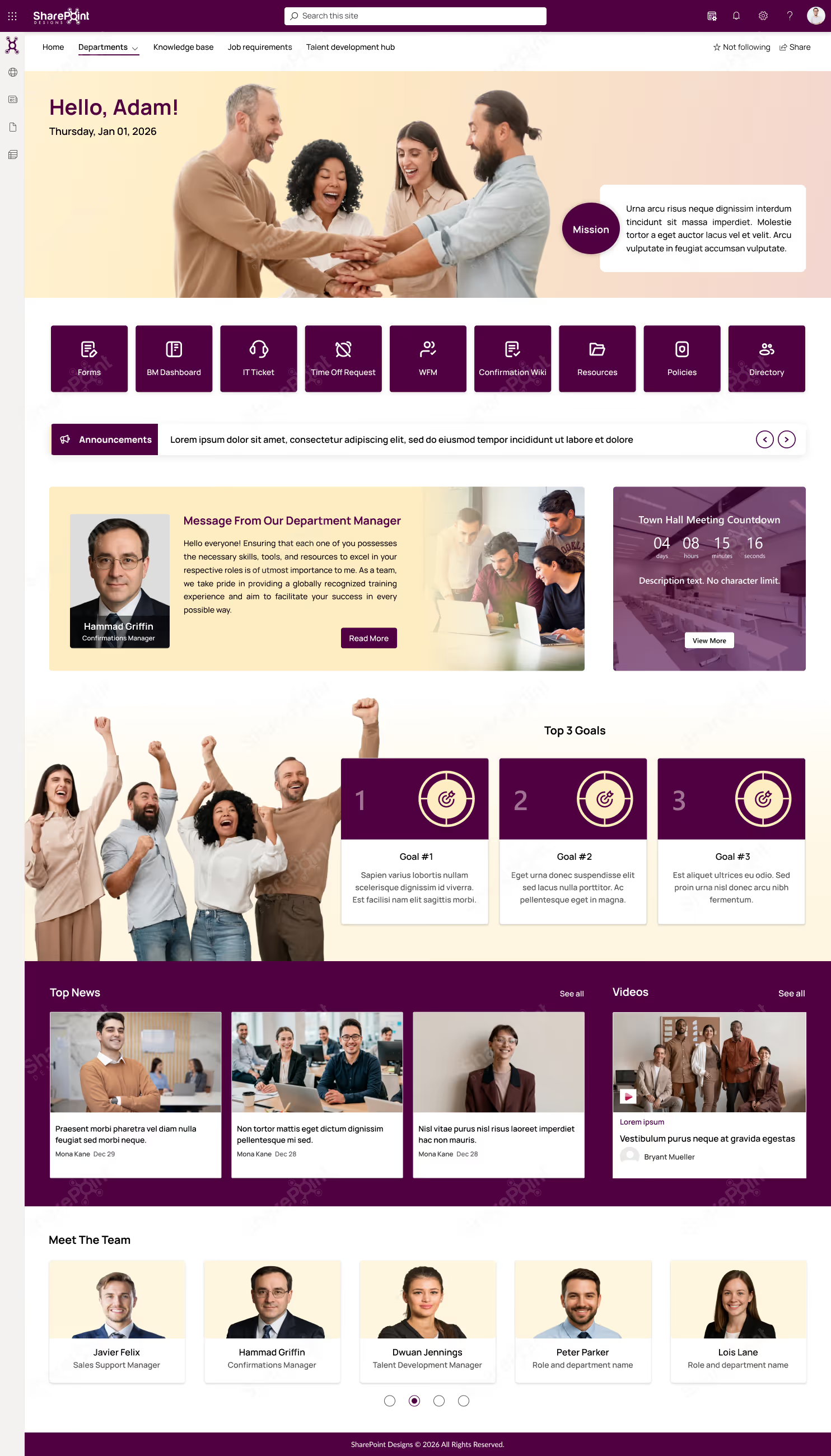
Benefits:
- Increases departmental productivity with relevant information.
- Strengthens team identity and goal alignment.
- Maintains corporate branding while allowing flexibility.
6. ISO Compliance & Document Management Template
A secure, audit-ready library for controlled documents, procedures, and compliance records with version tracking.
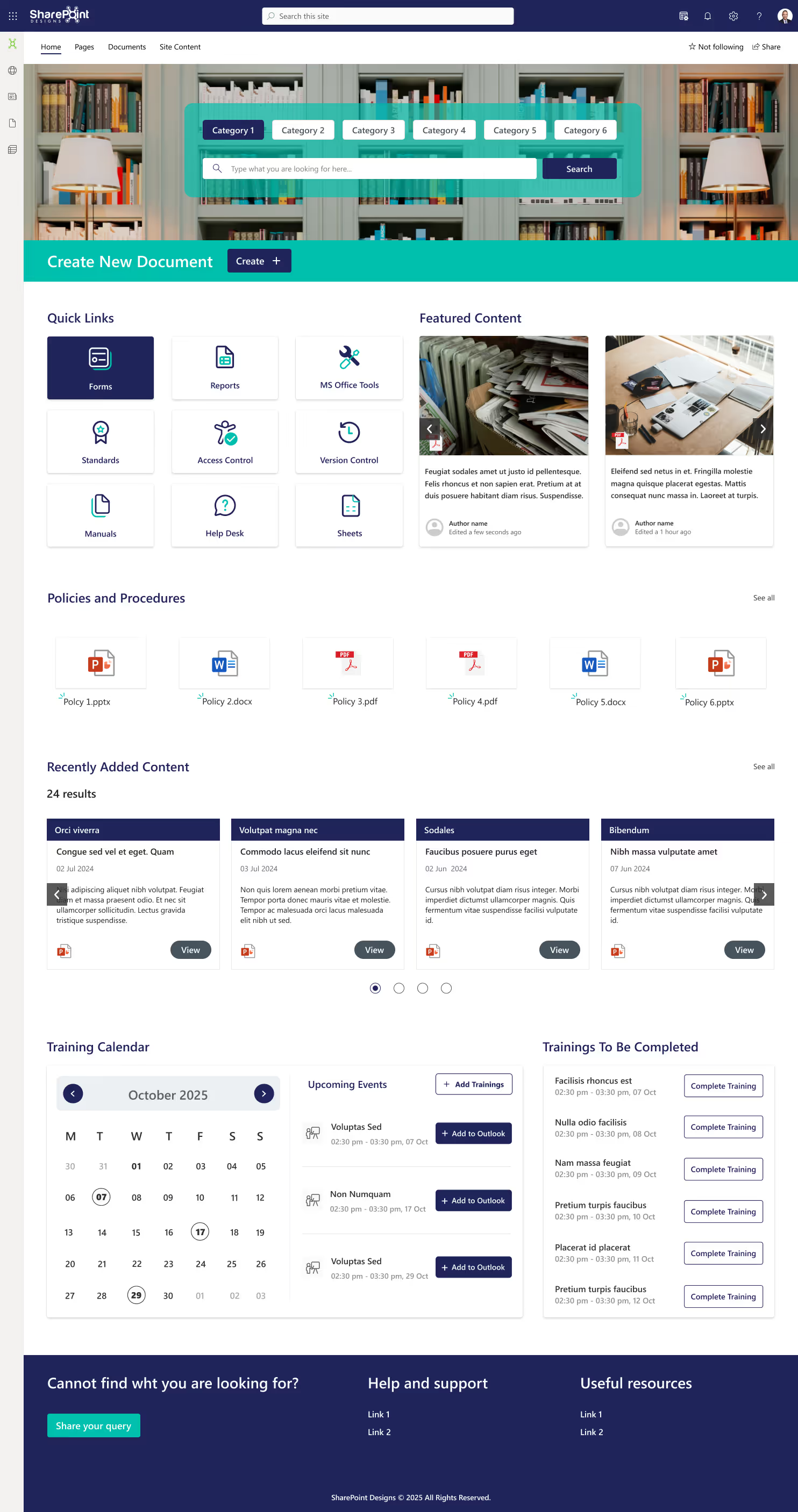
Benefits:
- Reduces audit preparation time by up to 40%.
- Ensures only approved versions are in circulation.
- Protects sensitive compliance documents with role-based permissions.
7. Internal Communication & Social Engagement Template
Includes blogs, discussion forums, polls, and recognition boards to encourage interaction beyond work tasks.
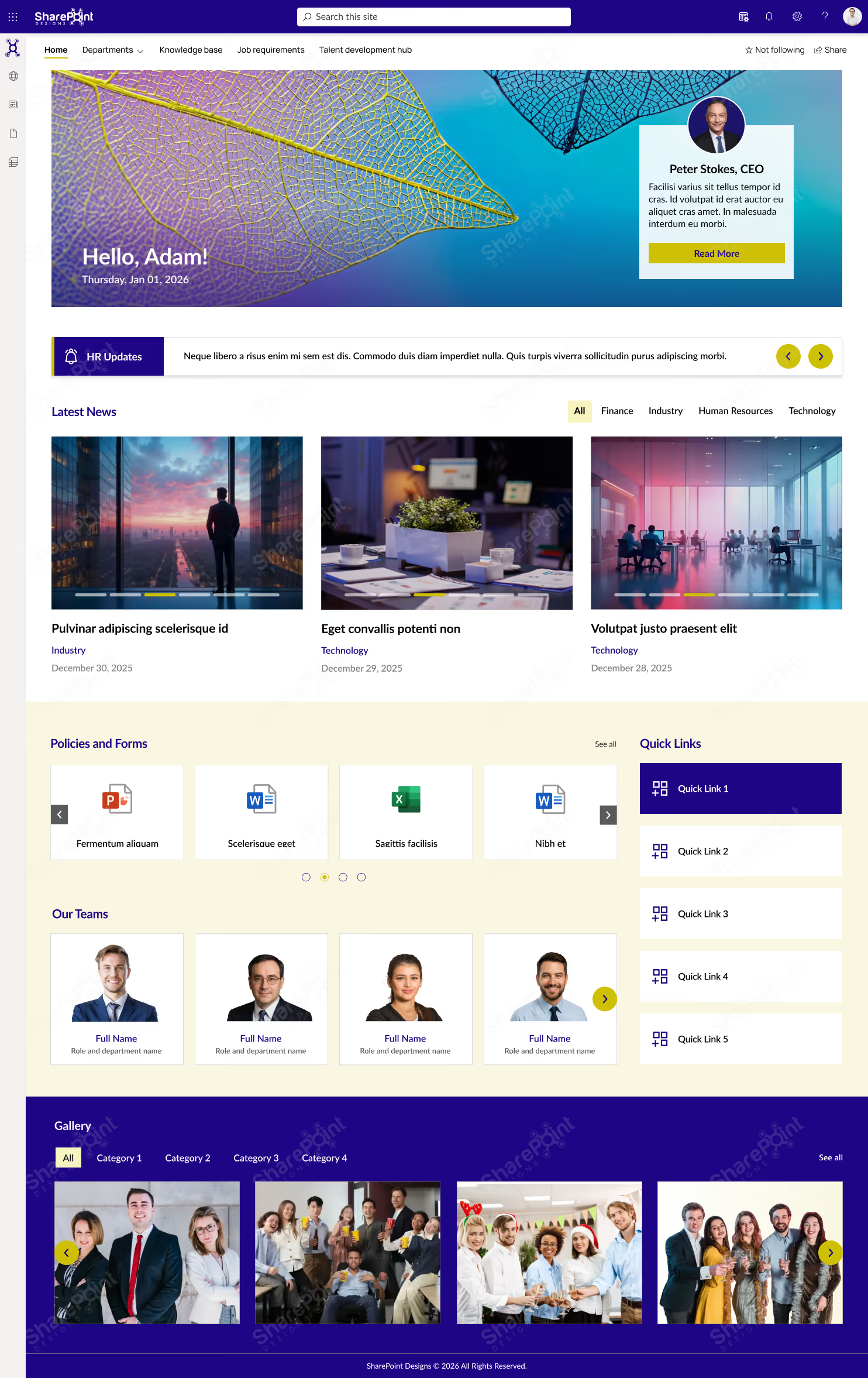
Benefits:
- Increases cross-departmental knowledge sharing.
- Boosts morale through peer recognition.
- Creates a sense of belonging in hybrid/remote setups.
8. Knowledge Base / FAQ Template
Central hub for SOPs, troubleshooting guides, and common queries, searchable by keyword or category.

Benefits:
- Cuts repetitive queries to IT, HR, and Operations.
- Improves efficiency with quick self-service answers.
- Maintains a single source of truth for processes.
9. CSR (Corporate Social Responsibility) Initiative Hub
A dedicated SharePoint template to plan, track, and promote your organization’s CSR activities. From volunteer programs to social campaigns, it helps align internal teams with your company’s mission to make a positive impact.

Benefits:
- Enhance corporate reputation with transparent CSR reporting.
- Increases employee engagement 79% of employees prefer socially responsible employers.
- Streamlines volunteer sign-ups and event participation tracking.
- Provides decision-makers with clear impact metrics for stakeholders.
- Strengthens partnerships with NGOs and local communities.
10. Sustainability & ESG Compliance Page
A purpose-built template to showcase and track your sustainability and ESG initiatives. It provides leadership with clear insights into environmental performance and compliance while inspiring employees to participate in green programs.
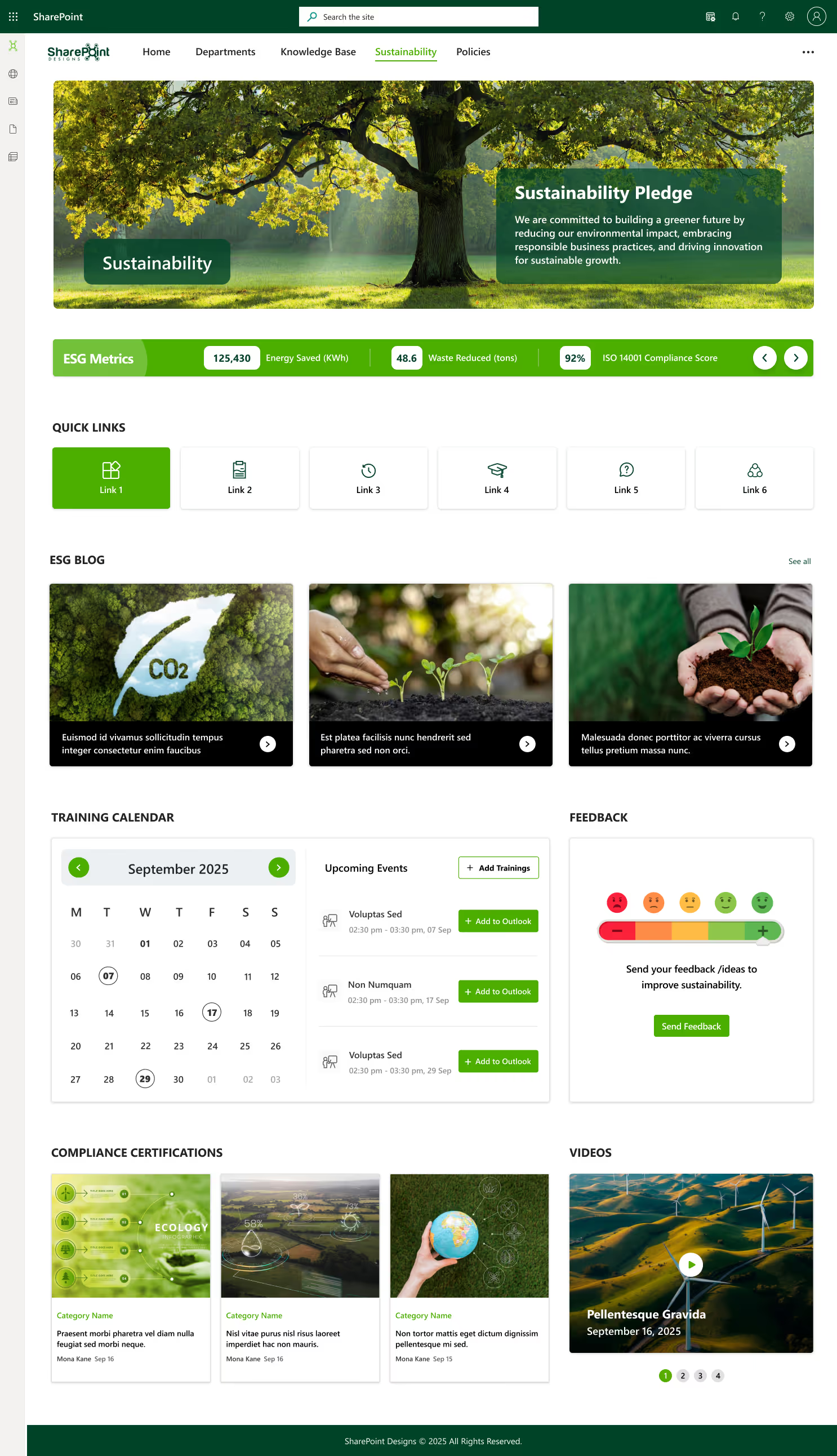
Benefits:
- Supports ESG compliance and sustainability certifications like ISO 14001.
- Improves brand positioning as a responsible and future-ready organization.
- Provides measurable metrics on energy savings, waste reduction, and carbon footprint.
- Encourages organization-wide participation in eco-friendly challenges.
- Helps attract investors and partners who prioritize sustainable practices.
Best Practices to Boost Engagement with SharePoint Templates
- Keep Navigation Simple: Too many links can overwhelm users.
- Use Rich Media: Images, videos, and infographics keep the intranet lively.
- Enable Feedback Loops: Polls, forms, and comment sections encourage interaction.
- Highlight Employee Achievements: Spotlight teams and individuals on the homepage.
- Refresh Content Regularly: Outdated pages discourage repeat visits.
Organizational Benefits & ROI
Implementing these templates delivers tangible business value:
- Time Savings: If each employee saves 15 minutes/day through better search &navigation, a 500-employee company recovers 1,562 hours/month worth ₹6.5-7.5lakh in productivity.
- Faster Communication: Centralized announcements reach 100%of staff instantly, avoiding delays that can cost opportunities.
- Lower Training Costs: Onboarding templates reduce manual HR training sessions, saving resources.
- Better Retention: Engaged employees are 87% less likely to leave, reducing recruitment costs.
For decision-makers, templates offer the best cost-to-benefit ratio when speed, scalability, and adoption rates matter.
How SharePoint Designs Can Help
At SharePoint Designs, we specialize in delivering ready-to-use modern intranet templates that are fully customizable to your brand and business needs.
We provide:
- Mobile-friendly, modern UI
- Role-based access setup
- AI and Microsoft 365 integrations
- Fast deployment with minimal IT effort
Whether you need an employee hub, departmental site, or onboarding portal, we can deliver a branded intranet that boosts engagement and productivity from day one.
Our clients report:
- 35-40% faster intranet adoption rates
- 20% reduction in internal email volume
- Significant productivity gains within the first 3 months
Ready to Launch Your Modern SharePoint Intranet in 2025?
Let’s build an engaging, future-proof intranet that your employees will love to use.
Additional Resources
Modern SharePoint Intranet Templates That Boost Employee Engagement in 2025
In today’s fast-paced, hybrid work environment, an intranet is more than just a file repository, it’s the digital heart of your workplace.

If your organization is aiming for ISO certification whether it’s ISO 9001 (Quality Management), ISO27001 (Information Security), or other standards one of the most important steps is setting up a secure, controlled, and audit-ready Document Management System (DMS).
An ISO-compliant DMS ensures that all your policies, procedures, records, and manuals are organized, controlled, and easily accessible to the right people. Without it, companies often struggle with scattered files, version confusion, and audit delays.
Microsoft SharePoint is one of the most effective platforms for building a centralized document control system that meets ISO requirements. With the right configuration, SharePoint can:
- Maintain strict version control
- Provide secure, role-based access
- Automate document approvals and reviews
- Enable faster ISO audits
In this article, we’ll explain why SharePoint is ideal for ISO documentation, how to set it up as your ISO-ready DMS, and the best practices to keep your company compliant.
Why ISO Certification Requires a Robust DMS
Regardless of the ISO standard, certain documentation requirements remain consistent:
- Document control - Approved procedures must be easy to identify and retrieve.
- Record retention - Evidence of compliance must be securely stored.
- Version management - Only the latest approved version should be in use.
- Audit readiness - Auditors must be able to easily verify compliance.
Without a proper DMS, companies risk:
- Outdated or duplicate files during audits
- Unclear document ownership
- Missing records for ISO compliance checks
An ISO-certified business needs a structured and traceable documentation process and this is exactly where SharePoint shines.
How to Use SharePoint as an ISO-Compliant Document Management System (DMS)
If your organization is aiming for ISO certification whether it’s ISO 9001 (Quality Management), ISO 27001 (Information Security),
A well-structured intranet is essential for organizations to enhance communication, foster collaboration among users, and efficiently manage important documents. Microsoft offers a powerful and flexible platform called SharePoint, which enables the creation of exclusive intranets tailored to an organization's needs using both built-in and customizable web parts. This guide will walk you through building a simple intranet using only the out-of-the-box components available in SharePoint Online.
Step 1: Site Creation
Follow these steps to create your SharePoint intranet:
1. Navigate to the SharePoint Admin Center:
- Go to the Microsoft 365 admin center (admin.microsoft.com).
- Select SharePoint from the left-hand menu.
- Click on Active Sites --> Create to start creating a new site.

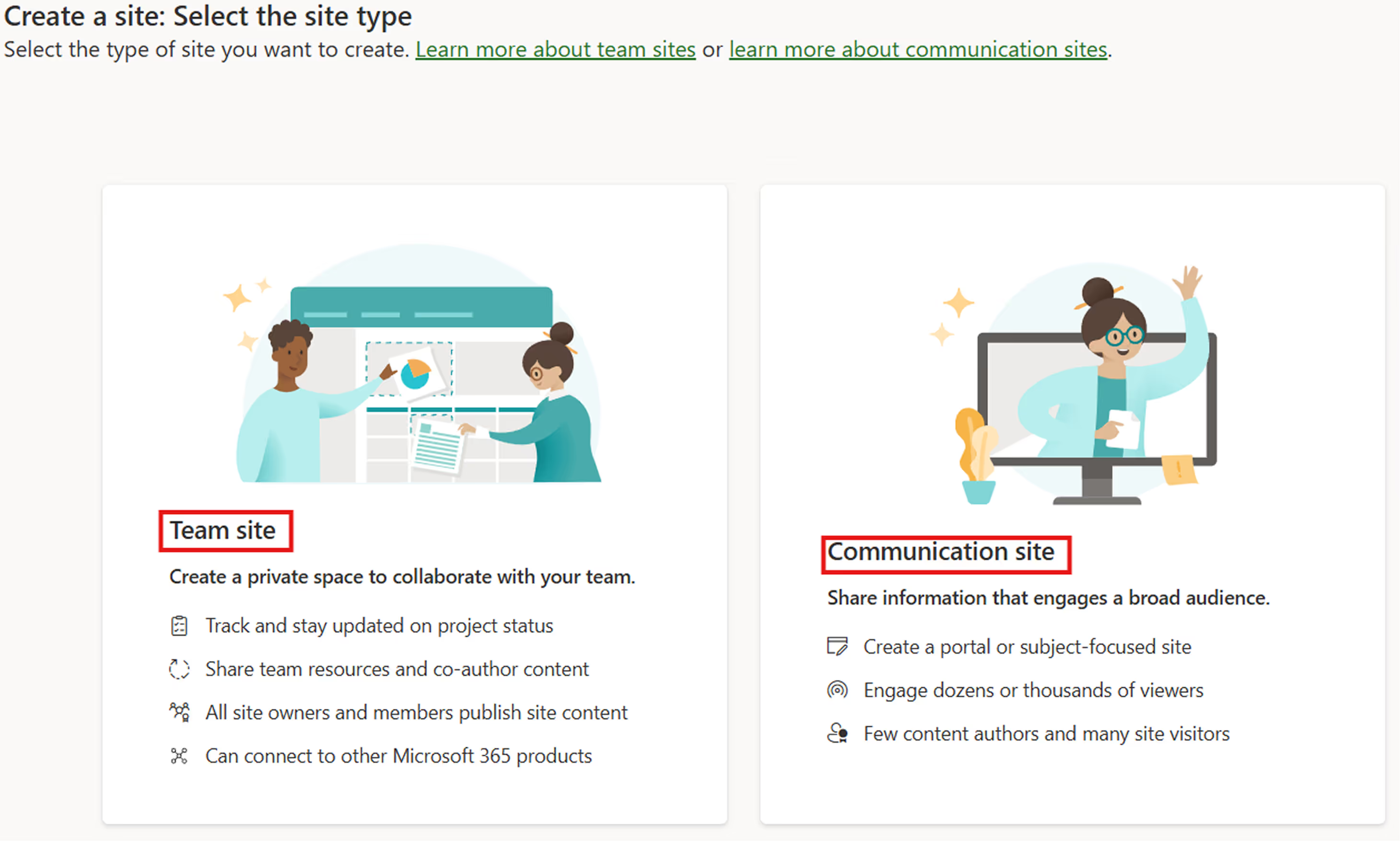
2. Choose the Type of Site:
You can select from Team Site or Communication Site based on your needs:
- Team Site: Ideal for collaboration within smaller groups or teams working on projects.
- Communication Site: Best for sharing news, reports, and information with a wider audience.
3. Select a Template:
SharePoint offers predefined templates like:
- Human Resources Template
- Learning Template
- Volunteer Template
Choose any of these templates to get started quickly or select the Blank Template to design your intranet from scratch.
4. Configure Site Details:
- Click on Use Template after selecting the template.
- Provide a Site Name that reflects the purpose of the intranet.
- Add the Site Owner who will manage permissions and content.
- Click Next to proceed.
5. Set Language and Timezone:
- Select the preferred Language and Timezone for your organization.
- Click on Create Site to finalize the site creation.
Step 2: Modifying Site Appearance in SharePoint
- Once the site is created, open it.
- SharePoint allows customization of the Theme, Font, Header, Navigation, and Footer.
- Click on the gear icon in the top-right corner and select "Change the look."
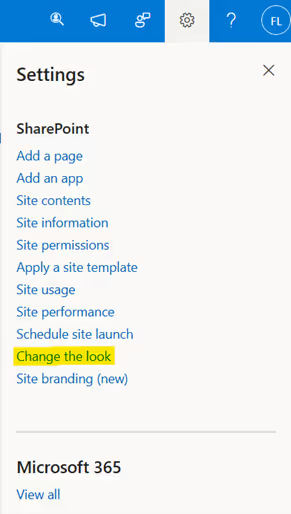
- In this section, you can modify various elements, including Navigation, Header, Theme, and more to personalize the site's appearance.
Step 3: Adding Web Parts in SharePoint
SharePoint provides the flexibility to add both Out-of-the-Box (OOTB) Web Parts and custom web parts to enhance site functionality.
- OOTB Web Parts: These include built-in components like Banner, Image Gallery, Button, Media, Weather, Events, Quick Links, Stream, etc.
- Custom Web Parts: If the available web parts do not meet specific requirements, custom web parts can be developed and deployed on SharePoint pages.
Now, let's explore a customized web part template sample to understand how we can build and integrate a tailored solution.

This SharePoint design template includes various components to enhance user experience and streamline organizational communication. Below is the purpose of each component:
1. Customized Suite Bar
- Displays the company logo with a custom suite bar color for branding.
2. Top Navigation
- Provides quick access to essential sections for better navigation.
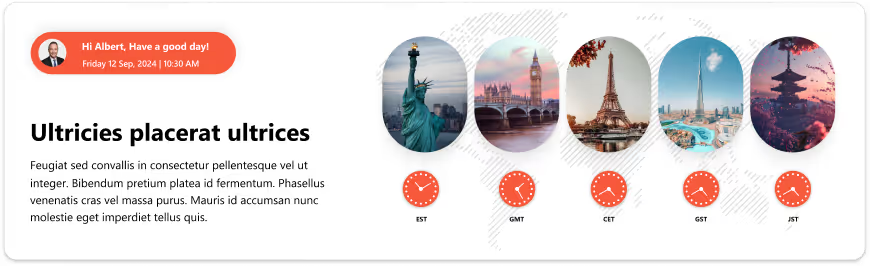
3. Welcome Banner
- Displays the current date and time along with a custom message before the logged-in user’s name.
- Includes a multiple time zone clock that updates based on the selected location.
4. Let’s Wish
- A scrolling carousel showcasing employees with birthdays.
- Users can send customized birthday wishes via the “Let’s Wish” button.
How to create a SharePoint site-A Step-by-Step Guide
A well-structured intranet is essential for organizations to enhance communication, foster collaboration among users,

Migrating to SharePoint can unlock a range of benefits for your organization from improved collaboration and document management to tighter integration with Microsoft 365. However, one of the biggest concerns during any migration is potential downtime, which can disrupt operations, reduce productivity, and frustrate users. The good news? With the right SharePoint migration consulting partner, you can execute a seamless migration without any major interruptions.
In this blog, we’ll walk you through best practices for smooth migration and how SharePoint Designs, a trusted SharePoint migration consultant, ensures zero-downtime transitions.
Why Zero-Downtime SharePoint Migration Matters
Even a short period of system unavailability can:
- Affect team productivity
- Interrupt business-critical processes
- Lead to data inconsistency
- Result in poor user adoption
This is why it's crucial to plan and execute a migration with minimal to no disruption and that requires expert SharePoint consulting services.
Step-by-Step SharePoint Migration Best Practices
1. Engage a Trusted SharePoint Migration Consultant
Partnering with experienced SharePoint migration consulting experts ensures your project is scoped correctly, risks are identified early, and the best tools and methods are applied. At SharePoint Designs, our consultants have successfully executed dozens of no-downtime migrations for global clients across industries.
2. Pre-Migration Assessment & Strategy
- Current data structure and volume
- Customizations and workflows in use
- Integration points with other systems
- User access and permission settings
A strategic plan should include timeline, scope, fallback plans, and communication protocols. Our SharePoint consulting services team will align the migration plan with your business goals while minimizing risks.
3. Choose the Right Migration Tools
Based on your assessment, select tools that best suit your content types, volume, and complexity. Our SharePoint consulting services team recommends Microsoft’s SharePoint Migration Tool (SPMT),ShareGate, or AvePoint for different scenarios. Tool selection is critical to maintaining uptime and data integrity.

How to Migrate to SharePoint Without Downtime Best Practices & Expert Advice
Migrating to SharePoint can unlock a range of benefits for your organization from improved collaboration and document management to tighter integration with Microsoft 365.

Intranets often get a bad reputation. They're seen as clunky, outdated platforms that employees avoid unless absolutely necessary. But it doesn’t have to be that way.
With the right combination of modern SharePoint web parts, your intranet can offer the same polished, intuitive experience users expect from today’s best websites. When executed well, a SharePoint intranet becomes more than a place to store documents or publish announcements, it becomes a branded, interactive digital workplace.
Let’s look at the essential web parts that can elevate your SharePoint site into something employees actually want to visit and use every day.
1. Hero Web Part
First impressions matter. The Hero web partlets you create a visually engaging entry point on your homepage using bold images, clear calls to action, and customizable tiles. This is your opportunity to spotlight internal campaigns, policy changes, department resources, or leadership messages in a highly visual way just like a homepage banner on a public website.
What it does well:
- Drives focus to high-priority content
- Supports branding through imagery and layout
- Makes the page feel designed, not templated
2. Quick Links Web Part
Users love efficiency, and websites make it easy to get where you need to go quickly. The Quick Links web part brings this concept to your intranet by offering neatly grouped, clickable buttons that take users directly to forms, tools, or frequently accessed pages.
You can present links as buttons, icons, or image tiles making it feel modern and user-friendly.
Best for:
- Onboarding checklists
- HR or IT service shortcuts
- Team tools and document hubs

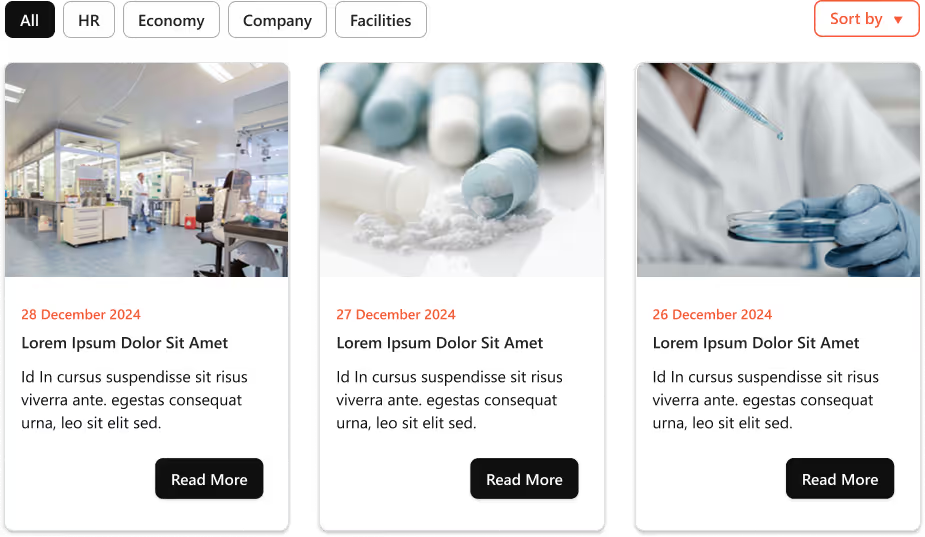
3. News Web Part
Think of this as your company blog or newsroom. The News web part is essential for sharing updates across departments, showcasing achievements, and reinforcing transparency. Formatted with thumbnails, titles, and short summaries, it mimics the newsfeed-style layout that users are familiar with from popular websites and apps.
Why it works:
- Keeps content fresh
- Drives repeat visits
- Encourages leadership visibility
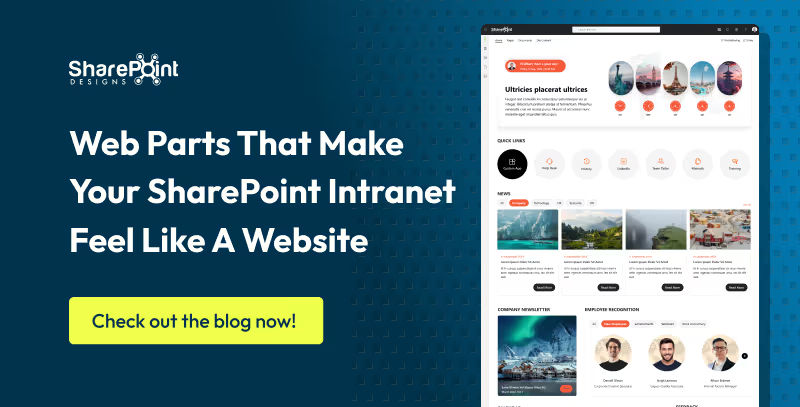
Web Parts That Make Your SharePoint Intranet Feel Like a Website
Intranets often get a bad reputation. They're seen as clunky, outdated platforms that employees avoid unless absolutely necessary.

What’s one lifehack that was shared by three influential leaders: Barack Obama, Steve Jobs, and Mark Zuckerberg?
All three of them are known for wearing almost the same outfit every day, inadvertently creating their own personal brand.
Why?
One of them said, "To reduce decision fatigue and free up mental energy for more important tasks."
What is decision fatigue?
It refers to a state of mental exhaustion that occurs after making too many decisions, especially when those decisions are complex or significant.
In the digital realm, users encounter countless decisions daily, such as which buttons to click, which boxes to check, and which forms to fill out that leads to cognitive overload. As designers, how can we simplify the users' experience and make their decision-making process a no-brainer?
Let's discuss a few tips based on real-life scenarios.
If the famous poet Robert Frost were to summarize this blog in his words, he might say something along the lines of:
“Two roads diverged in a yellow wood, and
the user took the one more traveled by,
And that has avoided all the confusion!”
If you had to wear the same outfit every day, which one would you choose?
Happy Decision Making!

The Science Behind the Click: The Psychology of Decision-Making!
All three of them are known for wearing almost the same outfit every day, inadvertently creating their own personal brand.

Imagine driving on a road full of potholes, that’s how your employees feel when using your intranet which has too many UX issues. Here’s a list of common UX pitfalls that make employees frustrated or even hate using your company’s Intranet.
1. Slow Load Times
Waiting equals frustration. If pages take more than a few seconds, users give up or get distracted.
How to fix?
Focus on optimizing the network infrastructure, server performance, and content delivery. Consider content management practices like archiving old content, optimizing images and videos, and using caching mechanisms.
2. Confusing Navigation
If users can’t find what they need quickly, they’ll either click around endlessly or just ask someone else.
How to fix?
Use a clear menu, group related tasks, and include a sitemap.
3. Too Many Clicks
Making users go through 5+ clicks to find the relevant information or to complete a simple task is NOT acceptable.
How to fix?
Streamline user flows; use personalized quick links /shortcuts for frequent tasks.
4. No Mobile Optimization
If it doesn’t work well on phones or tablets, remote or field employees are stuck.
How to fix?
Make sure the design is responsive by testing on different sized devices

10 UX Pitfalls that make your employees hate your Intranet!
Imagine driving on a road full of potholes, that’s how your employees feel when using your intranet which has too many UX issues.
Remember the game “Passing the Message”? One person whispers a message to another, and by the time it reaches the last player, the sentence has completely changed. It’s fun, but it also teaches a valuable lesson about communication and it's eerily similar to what happens in many organizations today.
Without a centralized, user-friendly platform, internal communication often gets lost in translation. An intranet helps by bringing all company information together in one place. However, the success of an intranet depends not just on its features but also on the user experience (UX).
Like in the game, a poor UX can lead to confusion, disengagement, and misinformation. Conversely, A great UX ensures that the message is communicated clearly, consistently, and enthusiastically across the organization.
So, how does UX truly impact intranet adoption? Let’s explore.
How Can a Better User Experience Engage Users?
To create an intranet that employees enjoy using, we need to think beyond just logic. A good user experience should connect with users emotionally. Just as we connect with our favorite apps or websites, the intranet should feel familiar, easy to use, and enjoyable. It should align with the way people think, feel, and work every day. Let’s break it down using the human senses as a guide:
Eyes – Grabbing Attention
First impressions matter. Just as our eyes help us notice things quickly, the visual design of the intranet plays a major role in capturing attention. When the design provides a visually pleasant experience and incorporates your company’s colors, fonts, and images, it feels familiar. Employees feel a connection, thinking, 'This is ours’.
Examples:
- Shaping the intranet design to echo your company's brand values.
- A simple, clear design helps users focus on what’s important.
- Rotating banners or hero images that reflect current campaigns or internal events.

Mind – Aligning with Intuition
Once the eyes notice something, the mind starts to think and judge. It compares what it sees with existing knowledge. That’s why the intranet should be easy to understand and navigate. A straight forward layout, intuitive menus, and neatly organized content make users feel at ease. When people don’t have to guess where to find information, they’re more likely to return and use it again.
Examples:
- Grouping content logically: HR policies, quick links, department pages.
- Intelligent search that understands shortcuts and key terms.
- Easy-to-access menus that remember the user’s last location.


Curiosity – Inviting Exploration
Once the design grabs the eye and aligns with the mind, users become curious, encouraging them to explore more. If the intranet includes well-designed and interactive tools, it captures their interest. As a result, occasional visitors may start using it more actively.
Examples:
- Interactive web parts like calendars, polls, and task reminders.
- Custom dashboards with relevant information based on role or department.
- News feeds and boards that celebrate employee achievements, birthdays, and new joiners.


How Good UX Drives Intranet Adoption?
To create an intranet that employees enjoy using, we need to think beyond just logic. A good user experience should connect with users emotionally.

In today’s fast-paced work environment, keeping everyone updated with the latest news and announcements is crucial. With Power Automate, you can streamline the process of creating news posts in SharePoint directly from Outlook emails. This automation saves time and ensures that important information is shared quickly and efficiently. This blog walks you through the steps to set up this efficient integration.
What You’ll Need
- Power Automate: Included with most Microsoft 365 plans for creating automated workflows.
- SharePoint Site: The destination site where your news articles will be published.
- Outlook Account: A Microsoft 365 Outlook account to receive emails.
Step-by-Step Guide to Create Your Flow
Step 1: Set Up the Trigger
Begin by signing in to Power Automate and creating a new flow using the "When a new email arrives" trigger from Outlook. You can set specific conditions to filter the emails that will initiate the flow, such as emails with a particular subject line (e.g., "News Update")

Step 2: Extract Content and Attachments
After setting the trigger,
Outlook Attachments:
- Add a "Get Attachment (V2)" action to set the "Message Id" and “Attachment Id” in the action.
- Use an "Apply to each" action to iterate through the attachments.
- Add a "Create file" action to store the Outlook attachment(image.png) in SharePoint, specifying the Site Address, Folder Path, File Name, and File Content. Then, use a "Get files (properties only)" action to retrieve the properties of the uploaded image for use in the news post.


From Inbox to Intranet: Automate SharePoint News Posts in Real-Time
In today’s fast-paced work environment, keeping everyone updated with the latest news and announcements is crucial.

Introduction
SharePoint introduced flexible layout section, within the flexible section we can move the webpart anywhere on the two-dimensional grid, resizing, over lapping and grouping the webparts, this guide covers how to use flexible sections in SharePoint, from adding web parts to customizing layouts for mobile views.
How to add flexible section in SharePoint Page
Just like adding other sections, click the Section button. This will open the Section toolbox. In the toolbox, you will see the Flexible Section listed first. Click on Flexible to add a Flexible Section to your page.

How to add web parts in flexible sections?
- After adding a Flexible Section to your page, web parts cannot be added directly. Instead, you need to drag them from one of the Column Layouts into the Flexible Section, duplicate an existing web part, or use the Toolbox pane. The Toolbox pane, located on the right side, allows you to easily add web parts by clicking or using the drag-and-drop feature into the Flexible Section.

- The Flexible Section contains a 12-cell,two-dimensional grid. We can move web parts anywhere within this grid. When dragging and dropping a web part, grid lines will appear to help with alignment. The web part's top-left corner will automatically align with the nearest border.

How to Resize Web Parts
- We can easily resize web parts using the resize handles, which are located at the center of the left and right borders of the web part. Simply drag the handles to increase or decrease the size of the web part within the Flexible Section. Additionally, web parts can be overlapped within Flexible Sections for a more customized layout.


- Web part resizing options vary depending on the type of web part. Web parts such as Text and Image can be resized to any widths. Other web parts, like Quick Links and People, have a default minimum width of four grid columns and a maximum width of eight grid columns. Similarly, custom web parts added within the Flexible Section follow the same default resizing limits, with a minimum width of four grid columns and a maximum of eight. Resize hints will appear while adjusting the web part size.


How to Resize Flexible Sections
To adjust the height of the Flexible Section, Click on the section to see the section resize handles located at the bottom. If you need more space to add web parts within the Flexible Section, simply drag the resize handles to adjust the section's height as needed.

How to Arrange and Group Web Parts
- If web parts overlap within the Flexible Section, we can easily arrange them. In the web part toolbar, click on the Arrange Item icon from the dropdown to reposition the web parts, adjusting which one appears in front and which one appears in the back.

- We can also group web parts within the Flexible Section. To do this, click on the first web part you want to group, then hold down the Ctrl key (Windows) or Option key (Mac) and select the other web parts you want to include. Once all the desired web parts are selected, click on the Arrange Items icon, then choose Group from the dropdown to group them together. Now, you can move the entire group by dragging it anywhere within the Flexible Section.

- To ungroup a web part, select Ungroup from the dropdown to separate the web parts.


How to Use Flexible Sections in SharePoint Pages: A Simple Guide
SharePoint introduced flexible layout section, within the flexible section we can move the webpart anywhere on the two-dimensional grid,
So, the success party for the launch of your new intranet is over, and now you face the important task of ensuring it remains current and engaging. Maintaining your SharePoint intranet is crucial for effective communications, team productivity, and ensuring the system stays fresh and functional.
It is important to establish a strategy for regularly updating the content and providing a steady flow of new information. So, here's a checklist to keep your Intranet buzzing, and make your team coming back for more!
Weekly checklist
These brief, quick check-ins conducted on a weekly basis may enhance relevance and activity within your intranet:
- Check for Latest news / announcements. Ensure they are updated at the source from where your intranet fetches the content, e.g. like social media sites, intranet pages etc.
- Gather feedback from users and respond to user feedback or comments.
- Ensure the Events calendar is up to date and all the important events / holidays are updated.
- Ensure Any reminders / alerts which are past the due date, are removed.
Monthly checklist
These monthly tasks aim at maintaining the security, organization, and usability of your SharePoint site:
- Ensure the new joiners are updated in the HR repository and their joining date, birthdays are updated. This will ensure their date get automatically pulled on the new joiners / birthdays & anniversaries webpart if you have included them on your intranet homepage.
- Ensure the Monthly calendar is up to date and all the important events / holidays are updated.
- Archive documents and pages that are stale or rarely used.
- Ensure that all department pages and respective department contacts are updated with recent data.
- Ensure all the admin / auto-response emails are active and the inbox is not full.
- Verify appropriate functioning of forms, workflows, and other automations.
- Fix all broken internal links and ensure there is no loose hanging content in any of the subpages.
- Modify user permissions to include new users and remove stale users as needed.
- Monitor total storage space and clean up unnecessary redundant content.
Quarterly checklist
Feel free to do these every now and then to ensure content remains engaging and everything runs smooth:
- Ensure the department wise contacts are up to date.
- Ensure the townhall calendars are up to date, if any.
- Revise branding as well as promotional materials, banners, and visuals set on the homepage.
- Gather comments from department leads on what improvements can be made.
- Enhance the intranet’s performance to evaluate the speed and ease of navigation.
With these simple checklists, your SharePoint intranet will stay reliable, clean, and helpful. Set reminders for these tasks and keep improving your digital workspace and we guarantee your users will keep coming back for more!

How to keep your SharePoint Intranet updated: Weekly, Monthly & Quarterly Checklists.
So, the success party for the launch of your new intranet is over, and now you face the important task of ensuring it remains current and engaging.
Migrating OneNote pages to SharePoint as documents can be a tedious task when done manually. In this blog, I will explain a step-by-step process to automate the migration using Power Automate.
Note: Images inside OneNote pages cannot be migrated using this method. A different approach and some manual works are required for that.
Step-by-Step Automated Migration Flow
1. Trigger: Manual Trigger
I have used a manual trigger for this flow, but you can modify it as per your needs. Additionally, I have initialized two variables to store the notebook key and section key.

2. Get OneNote Notebooks
I used the "Get recent notebooks" action to fetch the available notebooks and added a condition to select only one notebook, storing its key in a variable. If needed, you can loop through all the notebooks instead.


Automating OneNote to SharePoint Migration Using Power Automate’s OneNote Actions
Migrating OneNote pages to SharePoint as documents can be a tedious task when done manually.


.svg)