Tech Ideas & Best Practices
As organizations grow, leadership attention is often pulled toward brand building, customer acquisition, and revenue growth. Startups focus on visibility. Enterprises focus on scale.
But there’s one critical area that often gets overlooked how employees work, collaborate, and access information internally.
This is where a well-designed intranet can quietly but powerfully transform your business.
An intranet isn’t just an internal website. When done right, it becomes the digital backbone of your organization, supporting productivity, communication, and operational efficiency.
Why Modern Businesses Need an Intranet?
As teams expand across locations, departments, and time zones, common challenges start to surface:
- Information scattered across tools
- Time wasted searching for documents
- Manual processes slowing decisions
- Disconnected teams and poor visibility
An intranet solves these problems by creating a single, structured digital workplace where people, content, and processes come together.
Why Use SharePoint for Your Intranet?
Microsoft SharePoint is one of the most widely adopted intranet platforms globally and for good reason.
It’s trusted by enterprises and fast-growing organizations alike because it combines security, flexibility, and scalability.
SharePoint enables organizations to:
- Centralize information securely
- Enable collaboration across teams
- Automate business processes
- Improve internal communication
- Maintain governance and compliance
At SharePoint Designs, we’ve seen firsthand how organizations unlock real business value when SharePoint is implemented strategically not just deployed.
Explore Top SharePoint Features
How an Intranet Built on SharePoint Leverages Your Business?
1. Centralized & Secure Document Management
In today’s digital-first workplace, information is created constantly in multiple formats and locations.
A SharePoint intranet allows you to:
- Store documents securely in one place
- Control access with permissions
- Maintain version history and compliance
- Access files from anywhere, on any device
This ensures employees always work with the right information at the right time, without compromising security.
2. Seamless Collaboration Across Teams
As organizations scale, collaboration becomes harder especially with remote or hybrid teams.
SharePoint enables:
- Real-time document collaboration
- Team-based workspaces
- Integration with Microsoft Teams
- Easy sharing without email overload
Instead of silos, teams work together in a connected digital environment that supports faster execution.
3. Workflow Automation That Saves Time
Many businesses lose productivity to repetitive, manual tasks.
With a SharePoint intranet, you can:
- Automate approvals and requests
- Standardize business processes
- Reduce manual errors
- Speed up decision-making
By putting routine operations on autopilot, employees can focus on high-impact, strategic work instead of administrative overhead.
4. Stronger Internal Communication
Internal communication often breaks down as companies grow.
A SharePoint intranet becomes a central communication hub where you can:
- Publish company news and announcements
- Share HR updates and policies
- Enable leadership communication
- Keep everyone aligned and informed
Employee profiles, groups, and updates also give leadership visibility into what’s happening across teams without micromanagement.
5. Better Project Visibility and Control
Project management is one of the most practical intranet use cases.
Using SharePoint, teams can:
- Assign and track tasks
- Monitor project progress
- Share documents and updates
- Maintain transparency across stakeholders
Project managers gain clearer insights, while teams stay aligned on goals, timelines, and responsibilities.
6. Improved Employee Engagement
An intranet isn’t just about processes, it’s about people.
When designed well, it:
- Makes work easier
- Reduces frustration
- Encourages collaboration
- Builds a sense of belonging
Engaged employees are more productive, more informed, and more invested in business outcomes.
Real-World Example: How a SharePoint Intranet Delivered Business Impact?
Theory is useful, but real results matter more.
At SharePoint Designs, we’ve helped global organizations transform SharePoint into a high-performing intranet that employees actually use at scale.
For example, in our Daikin SharePoint intranet case study, the organization was facing several challenges:
- Fragmented systems with limited integration across regions
- Employees struggling to locate key documents and company updates
- Low engagement due to lack of multilingual support
- An outdated intranet with poor mobile accessibility
- Limited visibility into leadership communications
By redesigning Daikin’s intranet on SharePoint, we delivered a modern, global collaboration hub that addressed these gaps:
- Centralized document management with version control and advanced search, reducing document retrieval time by 45%
- A custom, site-wide navigation and personalized homepage that improved content visibility by 40%
- Departmental micro-sites and discussion boards that increased collaboration and engagement by 25%
- Multilingual intranet experience supporting 8 languages, improving inclusivity across regions by 50%
- Automated email subscriptions and mobile-first design, driving a 60% increase in recurring intranet engagement
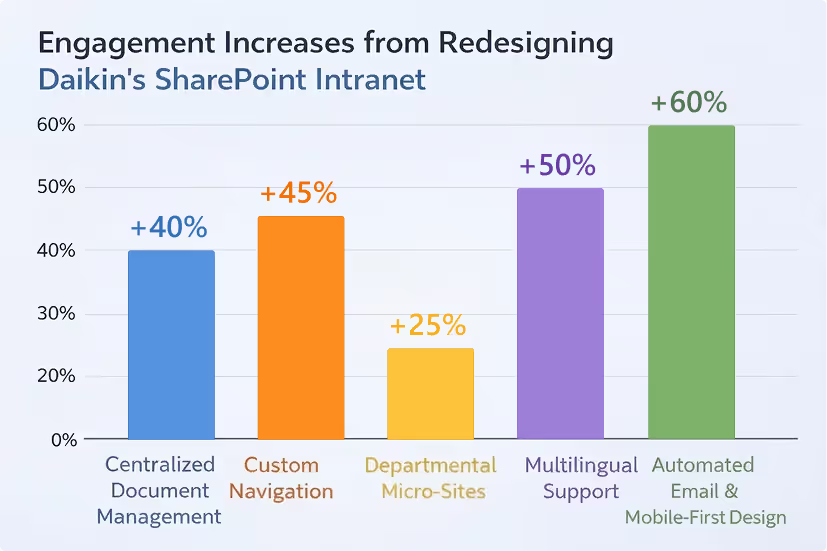
This transformation helped Daikin create a scalable, employee-centric intranet one that improved discoverability, strengthened leadership communication, and connected teams across regions and devices.
Read the full case study
This kind of real-world implementation demonstrates how an intranet doesn’t just support work it actively drives business efficiency.
Why SharePoint Intranets Deliver Long-Term Business Value?
Organizations that invest in a structured intranet experience see measurable benefits:
- Faster onboarding
- Reduced operational costs
- Higher employee adoption of digital tools
- Better alignment between teams and leadership
- Stronger governance and compliance
This is why SharePoint remains the intranet platform of choice for both enterprises and fast-growing startups.
Expertise Matters: Intranet Success is in the Design
Simply having SharePoint isn’t enough.
The real impact comes from:
- Thoughtful information architecture
- User-centric design
- Clear navigation
- Role-based experiences
- Ongoing optimization
At SharePoint Designs, we specialize in creating intranets that don’t just exist but actively support business growth.
Final Thoughts: Let Your Intranet Work for Your Business
An intranet should never feel like “extra work.”
When built strategically, a SharePoint intranet:
- Simplifies daily operations
- Improves collaboration
- Strengthens communication
- Frees teams to focus on what matters most
If your goal is to focus on core business outcomes while reducing operational friction, a well-designed SharePoint intranet is one of the smartest investments you can make.
Talk to our SharePoint intranet experts

How can Intranet leverage your business?
In the world of growing corporates, top management primarily focuses on brand marketing and revenue generation. Start-ups face this common



.svg)